 Social Media Means
Social Media Means
Social Media Means

 Photo: cottonbro studio
Romantic rejection stimulates parts of the brain associated with motivation, reward, addiction, and cravings. Being romantically rejected can be a familiar feeling that mirrors one's childhood, leading that person to seek out more of the same.

Videos can go viral on any platform that hosts video content. YouTube, TikTok, Facebook, Instagram, Twitter—you name the platform, and there's...
Read More »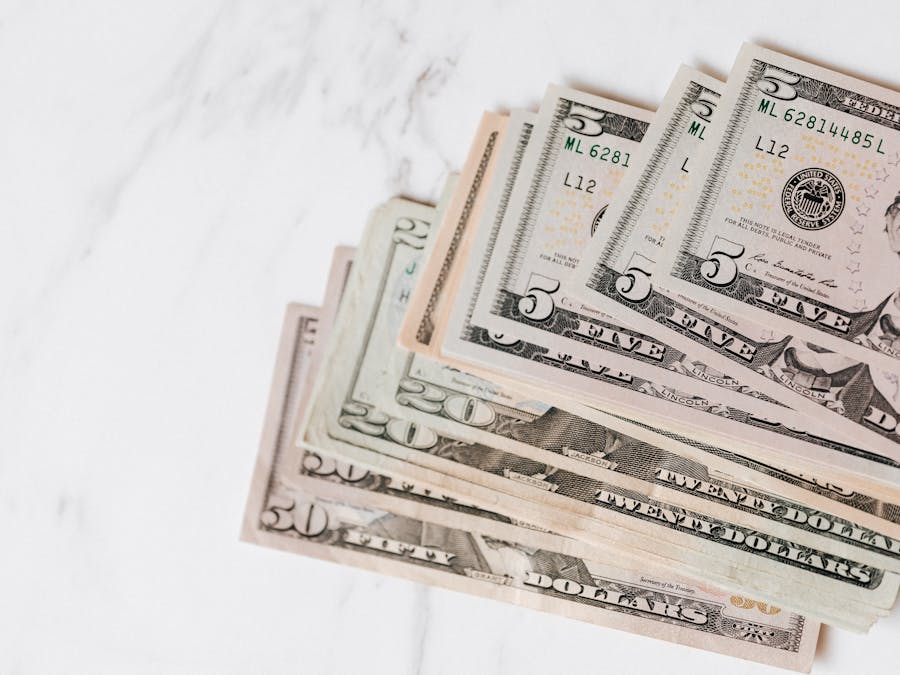
With a $500,000+ income, you are considered rich, wherever you live! According to the IRS, any household who makes over $500,000 a year in 2022 is...
Read More »For simplicity's sake, I refer to heterosexual women in this post, but what I discuss here definitely applies to heterosexual men and non-heterosexual individuals as well. Many of us are familiar with this scenario: Mr. Nice Guy is cute, sweet, interesting, smart, and available. Even better, he is interested in a relationship with you. The only problem is that you just aren't that into him. Mr. Bad Guy, on the other hand, is on your mind 24/7. Like Mr. Nice Guy, Mr. Bad Guy has a lot of good qualities, but he is either unavailable for a relationship in general, or unavailable for a relationship with you, because he just isn't that into you. Despite his continual rejection, however, you cannot seem to get him off your mind. The more he rejects you and the more forcefully he indicates that he doesn't want to be with you, the more interested you seem to become.

Here are four ways to rock the screening call with a recruiter. Demonstrate Quickly That You Cover the Basics. ... Show That You're Truly...
Read More »
Digital marketing is important because it connects brands with consumers when they're most receptive. Digital marketing strategies increase...
Read More »The study, published in the Journal of Neurophysiology in 2010, shows that people in this situation are really suffering from a drug addiction, and the drug is the person rejecting us, leaving our love unreciprocated. But the results do not give us insight into why we respond to romantic rejection in this way, and it doesn't answer the question of how we have developed this troubling tendency of wanting people we can't have. You might think it is a matter of heartbreak and grief. But that cannot be the full answer either, because in some cases we haven't lost anything that we can grieve the loss of. We can be madly in love with someone who doesn't want us, and never wanted us but the situation can sometimes be as painful as someone breaking up with us. In a previous post, I argued that part of the rejection pain we feel when love is unreciprocated may be caused by an evolutionarily-grounded repulsion to social rejection combined with a social stigma associated with breakups and divorce. But that, too, does not explain why we often want only those individuals we cannot have. Another aspect of this anguish may have to do with the perceived value of the other person. If the other person doesn't want us or is not available for a relationship, their perceived value goes up. They become so "expensive" that we cannot "afford" them. Evolutionarily speaking, it would have been an advantage to mate with the most valuable mate. So it makes sense that we become more romantically interested when a person's perceived value increases.
A 15K is 9.3 miles long. That's the same as running the length of an NBA-regulation basketball court a little more than 522 times. At an 11-minute...
Read More »
Is Social Media Marketing a Good Job? Yes, it's one of the fastest-growing career opportunities because of the increasing number of businesses...
Read More »Your attachment style can also influence how much you get stuck on people who don't want you. People with a dependent attachment style (also known as a co-dependent or anxious attachment style) are brought up to seek out people who will cause them pain. In a classic scenario, they grew up in a household with a mother or father who emotionally rejected them. For these individuals, being romantically rejected is a familiar feeling. Since we are always more likely to act in ways that are familiar to us, if we have a history of rejection, we are likely to seek situations where we should expect more rejection. Our brains interpret these scenarios as normal, even though we know that it is not normal to seek out scenarios that lead to pain and anguish. Finally, there is the "different ending" explanation: If we have a history of being rejected—by a parent, for example—we sometimes subconsciously seek out similar scenarios, hoping that the story will have a different ending next time. Only it does not. It is worth remembering Einstein's definition of insanity—doing the same thing over and over and expecting a different result.

On average, YouTube monetization for 1000 views (also known as CPM – Cost Per Mille) ranges from 0.5 to 6 USD based on the location of viewers and...
Read More »
Top 26 Side Hustles to Consider Rent out your car. Become an online coach. Build passive income with real estate. Offer in-person services. Start a...
Read More »
17 Jobs Where You Don't Have To Talk To People! 2022 Transcriptionist. ... Data Entry Clerk. ... Blogger. ... Laboratory Technician. ... Truck...
Read More »
9 social media trends in 2022 TikTok will become bigger. In September 2021, TikTok reported more than 1 billion active monthly users and is still...
Read More » Promotion
 Promotion
 Promotion